The Café Review
Role: Senior UX Designer (Information Architecture, Content Architecture, Interaction Design, Visual Design)
Product: Public-facing literary journal platform supporting subscriptions, donations, e-commerce, and a searchable content archive
Context
The Café Review is a Portland, Maine–based, quarterly literary journal founded in 1989 and one of the longest-running poetry publications in the United States. Run entirely by volunteers, its mission is to connect Maine poetry with the world while bringing international poetry to Maine. In addition to its print publication, the organization hosts live readings and events and maintains a growing body of published poetry, artwork, reviews, and interviews.
When I took ownership of the website, it functioned primarily as a static “about us” presence. As the organization evolved, the site needed to become a core operational product: supporting revenue generation (subscriptions, back issues, donations), serving contributors and readers, and acting as a long-term digital archive for decades of published work — all without a dedicated budget or technical staff.
Problem Framing
The challenge was not visual polish, but scale and structure.
The existing site did not support the primary ways users wanted to engage with the publication. Readers and contributors could not easily find past issues, search for poets or artwork, listen to recorded readings, purchase subscriptions or back issues, or explore interviews and reviews. From an organizational perspective, the site was not contributing meaningfully to revenue and did little to extend the life or reach of the print journal.
There was also a strategic concern that moving content online could diminish the value of the print publication. Any solution needed to reinforce — not replace — the quarterly journal, while remaining manageable for a volunteer-run organization with limited time and technical resources.
At the same time, the volume of content presented a usability risk: hundreds of pages per year across poetry, art, reviews, interviews, and audio. Without a clear information architecture, the site could easily become overwhelming or fragmented.
Approach
I treated the website as a long-lived content product rather than a marketing site.
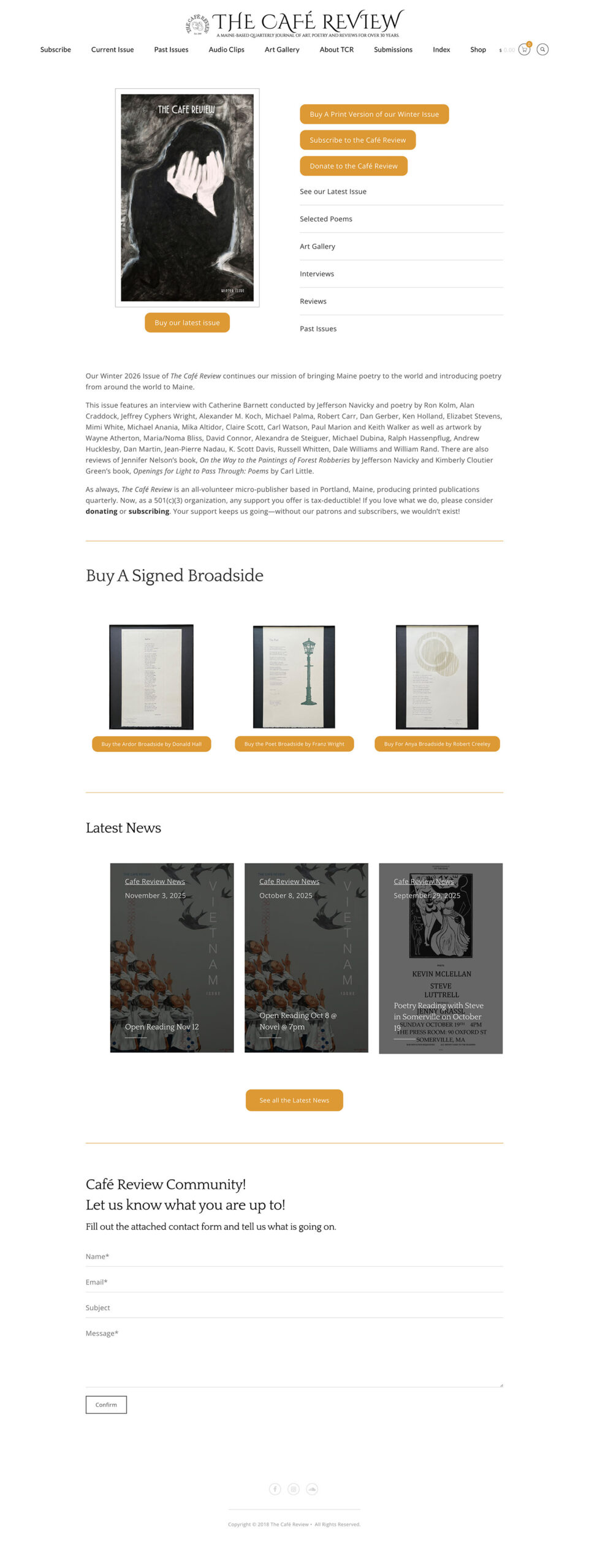
The core UX strategy centered on building a flexible, scalable content architecture that allowed users to explore the publication in multiple ways while keeping editorial workflows sustainable. Print issues became the organizing spine of the site, using issue covers and publication seasons as visual and structural anchors. From there, users can navigate by issue, contributor, content type, or search — supporting both linear browsing and targeted discovery.
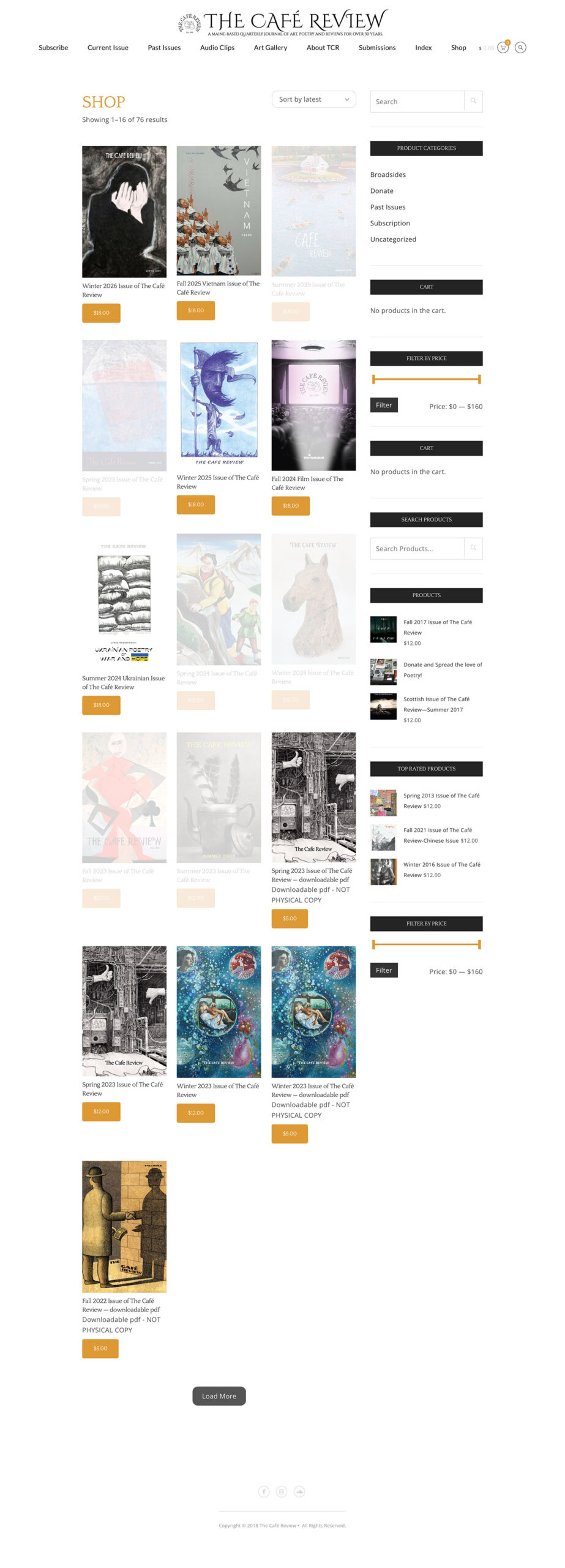
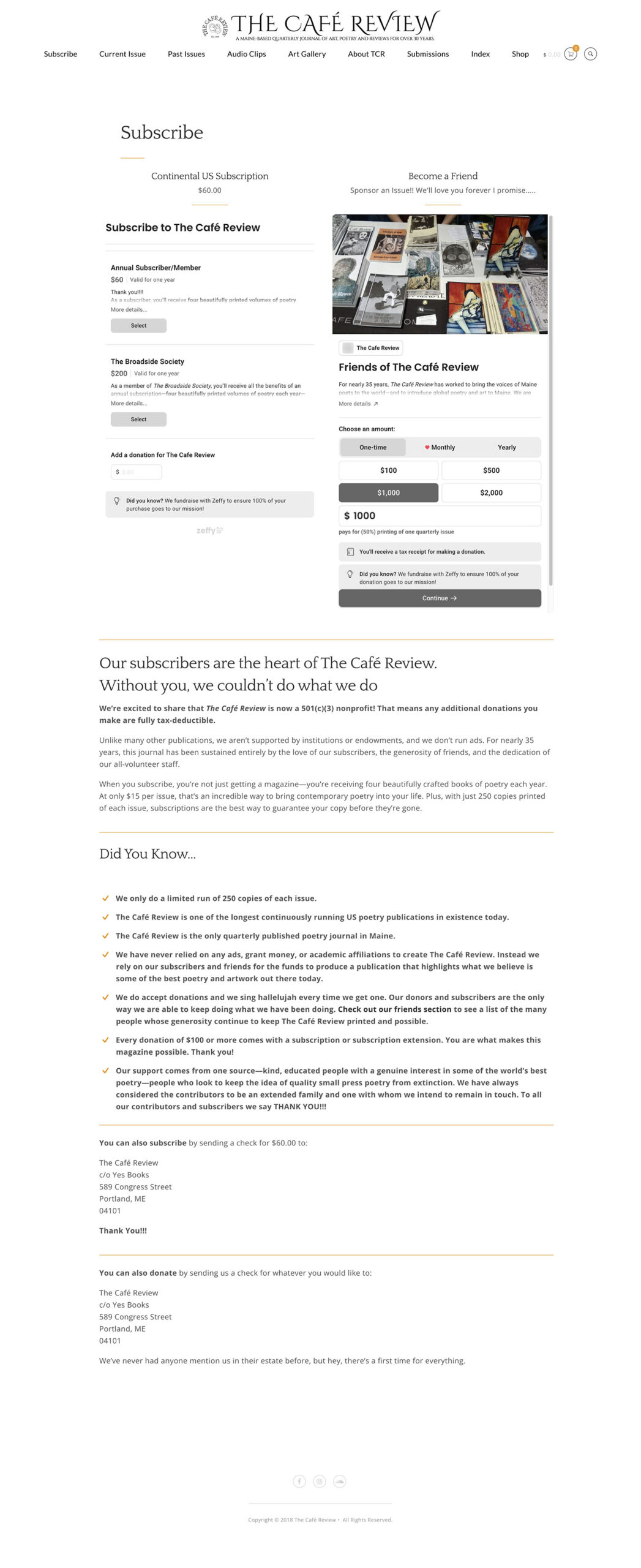
To support revenue without disrupting the reading experience, I integrated back-issue purchasing through WooCommerce, while donations and subscriptions are handled separately through Zeffy to reduce friction and keep financial support visible but secondary to the editorial mission.
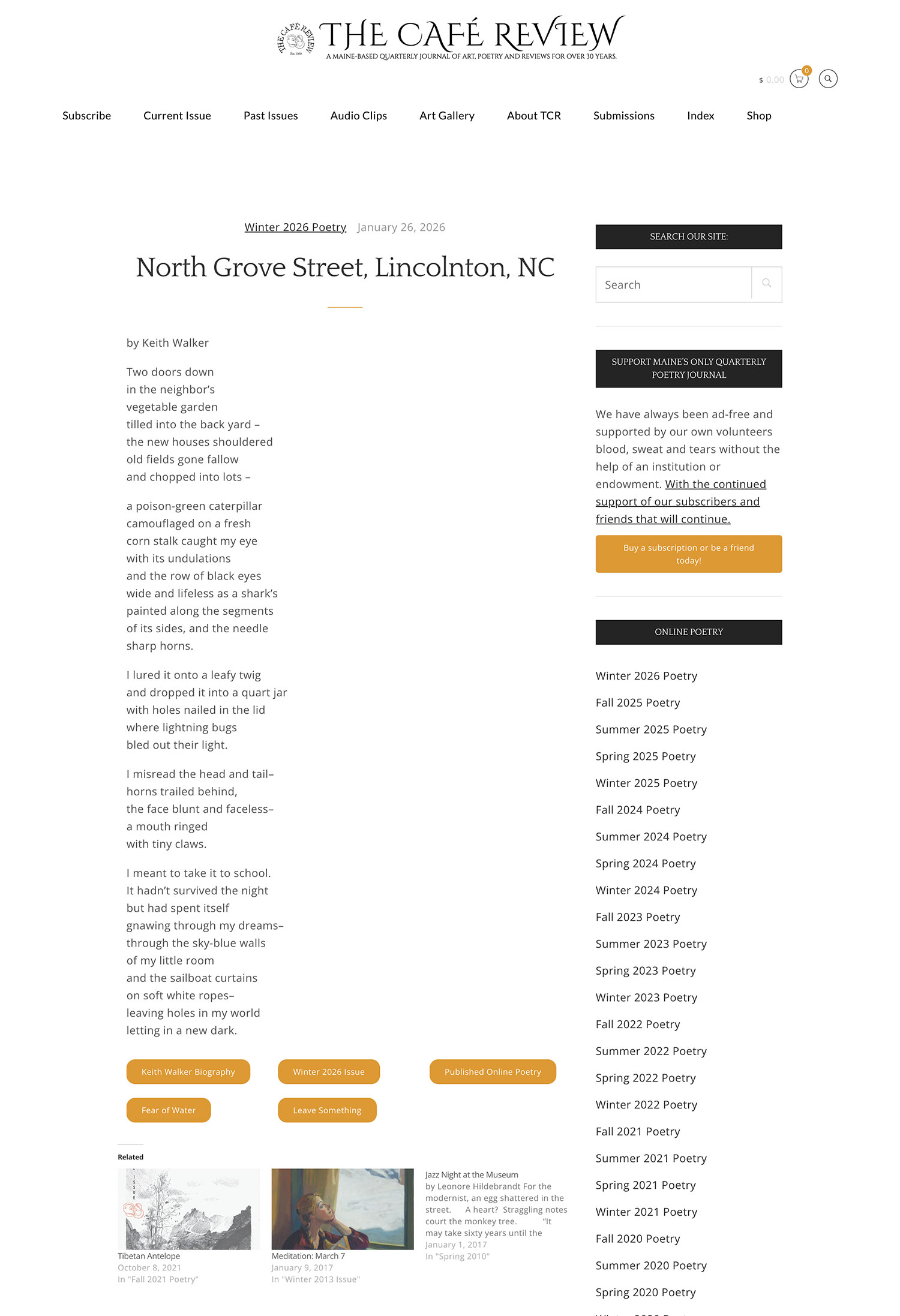
A searchable archive was introduced for all content published since 2009, including poetry, artwork, reviews, interviews, contributor bios, and audio recordings. Categories and metadata were deliberately structured so that a single piece of content could be discovered through multiple paths — by issue, by author, or by format — accommodating different mental models and research behaviors.
Because the organization is volunteer-run, maintainability was a first-class UX concern. I designed reusable templates and content patterns that reduce cognitive load when publishing large volumes of material, allowing the site to grow without requiring constant re-architecture or technical intervention.
Outcome & Impact
The redesigned site transformed from a static informational presence into the primary digital platform for The Café Review. It now functions as a revenue-supporting product, a comprehensive public archive, and an extension of the print journal rather than a replacement for it.
The online archive has increased the visibility and longevity of published work, giving contributors a permanent, searchable reference for their writing and art. At the same time, the site supports subscriptions, back-issue sales, and donations — helping sustain printing, distribution, and operational costs for the volunteer organization.
Perhaps most importantly, the site established a foundation for future growth, including plans to digitize and archive issues dating back to the journal’s founding in 1989, without requiring a fundamental redesign.