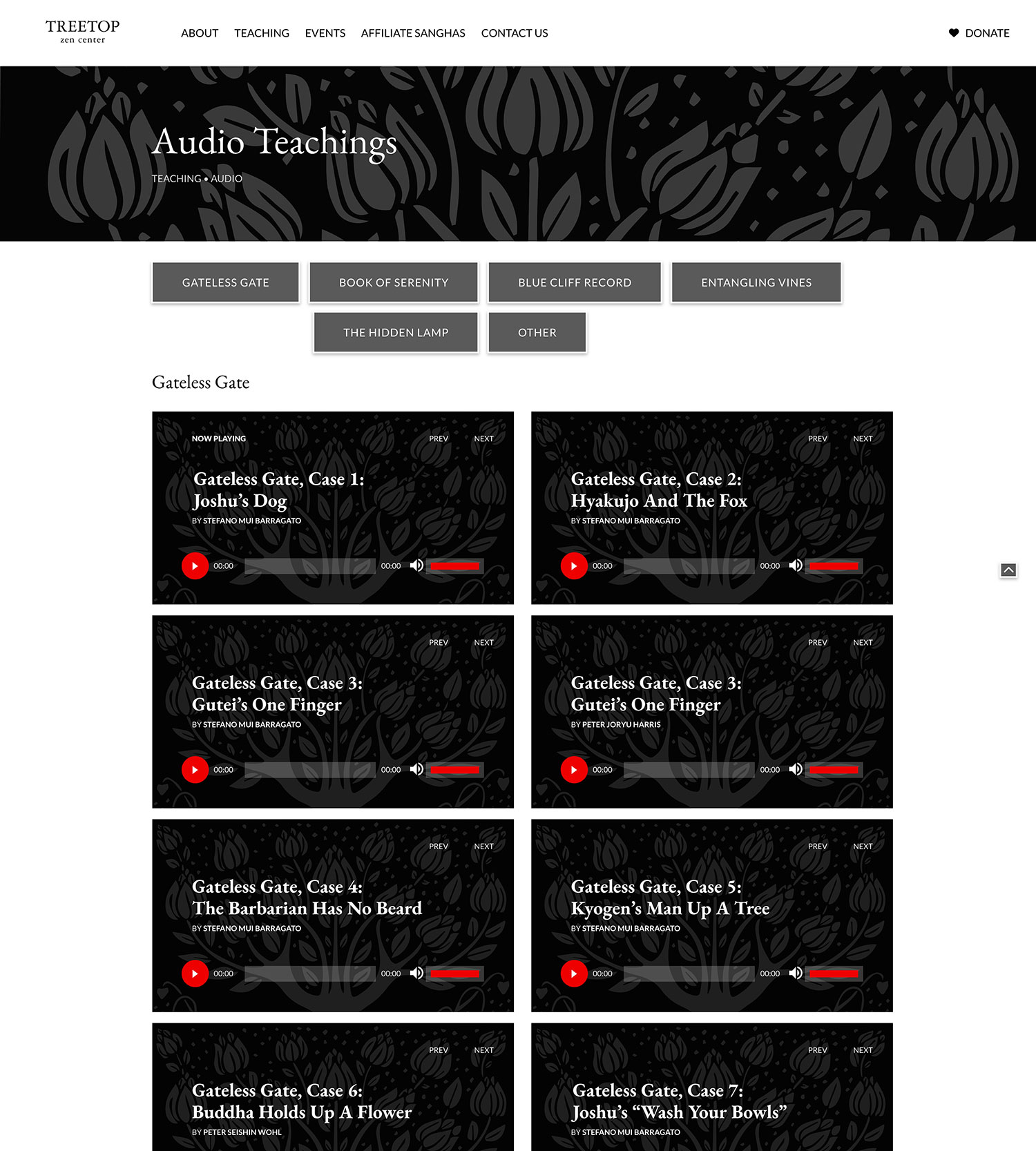
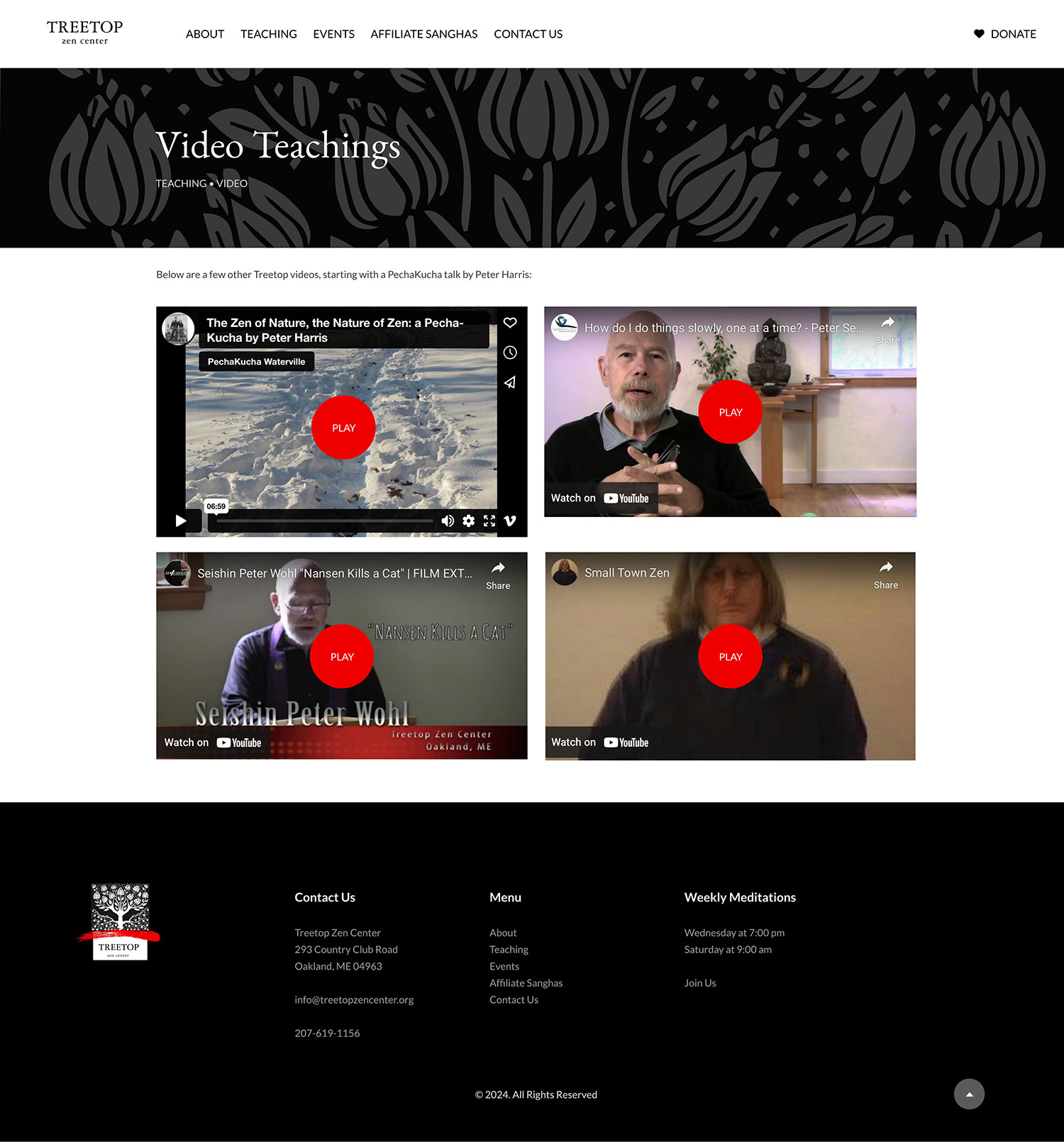
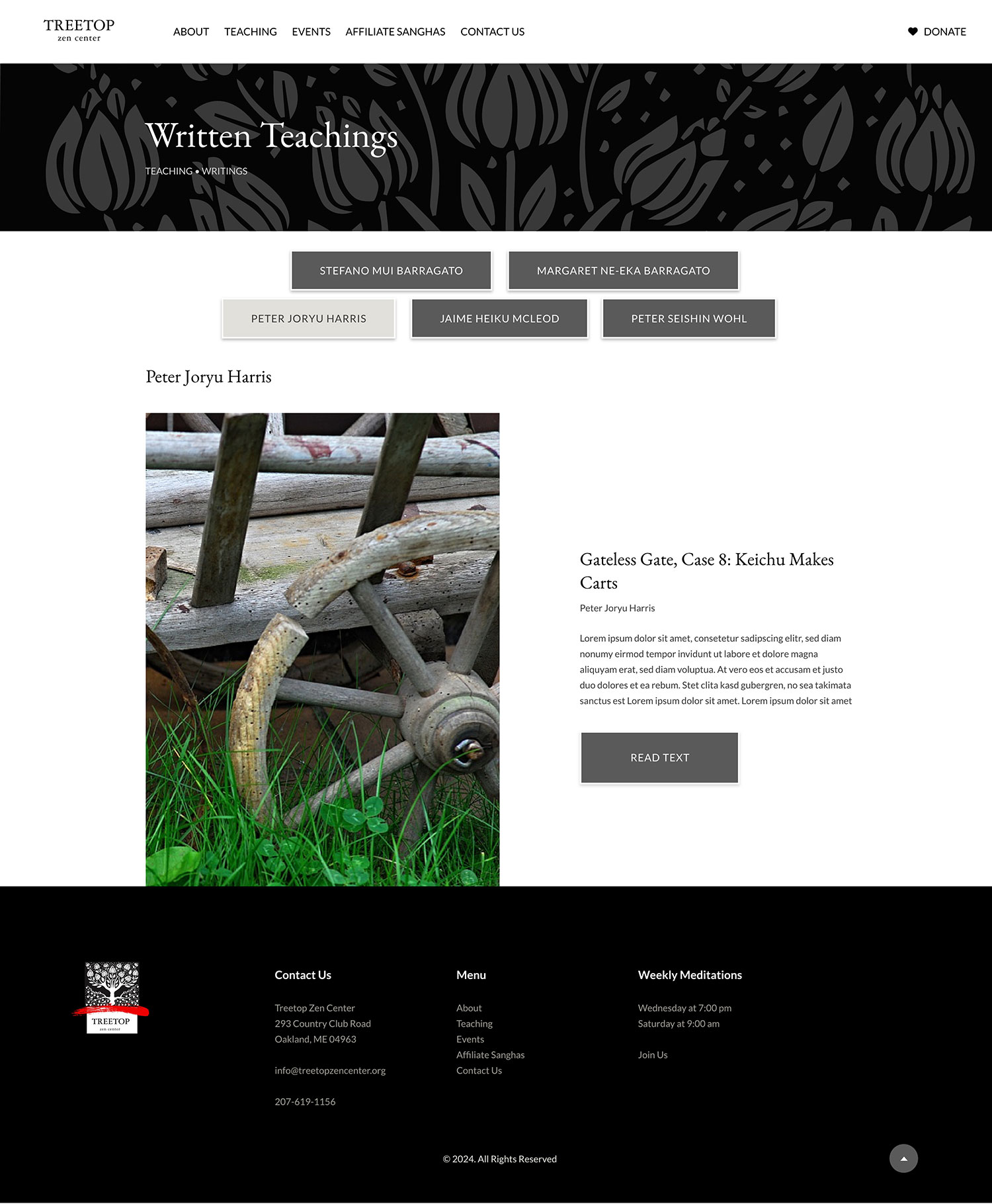
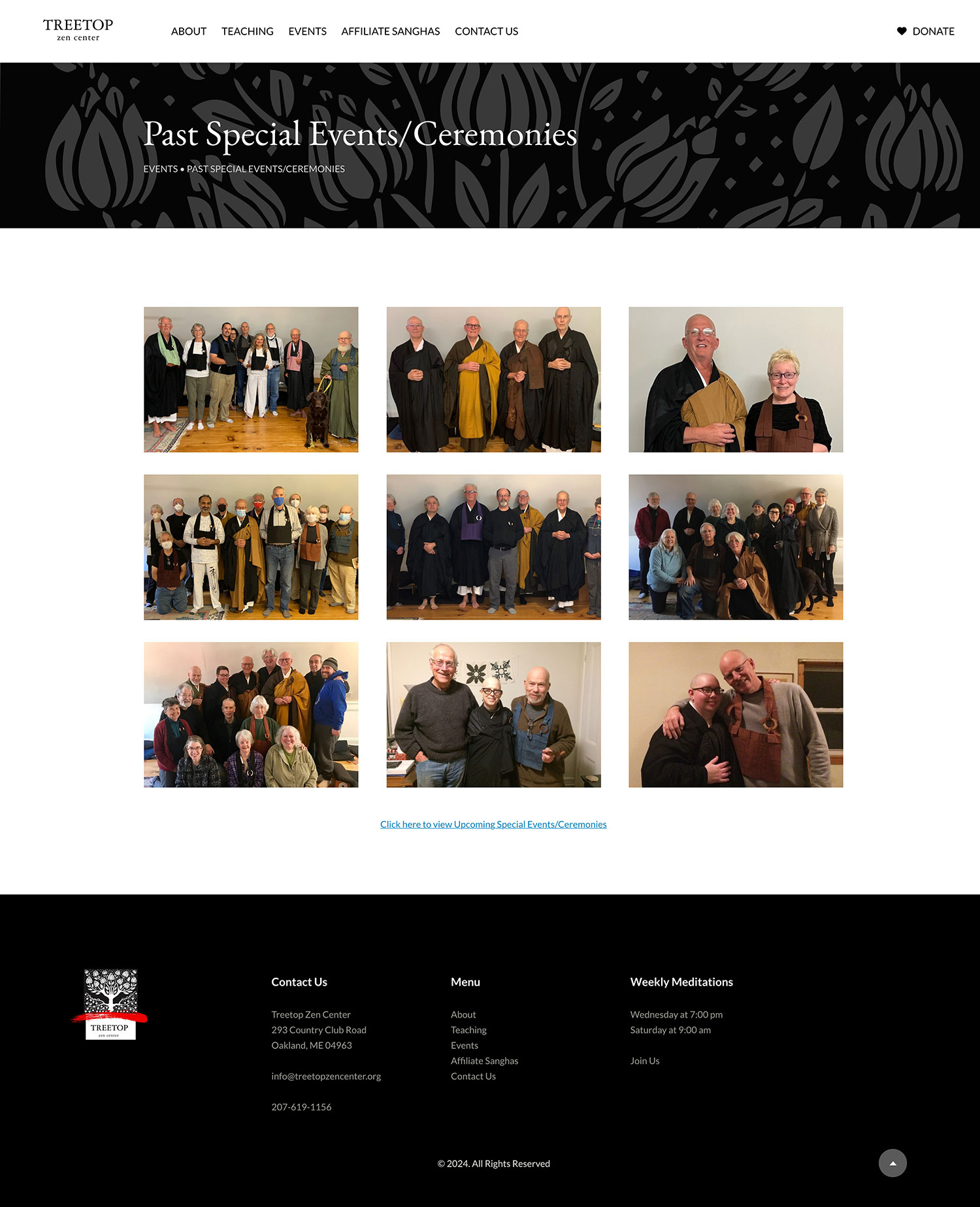
Treetop Zen Center
Role: Senior UX Designer (Information Architecture, Interaction Design, Content Hierarchy)
Product: Public-facing website and event discovery experience for a community-based organization
Context
Treetop Zen Center is a small, community-based Zen practice offering weekly meditation sessions, teachings, and in-person gatherings. Their website served a wide range of audiences—from first-time visitors curious about meditation to long-time practitioners relying on the site for up-to-date schedules and events.
The existing site had not kept pace with how the center actually operated. Information about meditation times, events, and teachings was fragmented across multiple pages, updates were inconsistent, and the overall experience felt dated and difficult to maintain for a non-technical editor. While donations were important to the organization, the leadership was clear that the site should first communicate openness, accessibility, and community—not financial pressure.
In addition to redesigning the website, I created a logo for the center to give them a consistent visual identity they could use across digital and printed materials.
Problem Framing
Although the initial request was framed as a visual refresh, early conversations revealed that the core issue was how users found and trusted information, not simply how the site looked.
Key challenges included:
- Visitors frequently came to the site looking for meditation schedules and upcoming events, but this information was spread across multiple interior pages and easy to miss.
- Regular attendees needed reliable, up-to-date information, while first-time visitors needed clarity and reassurance about what to expect.
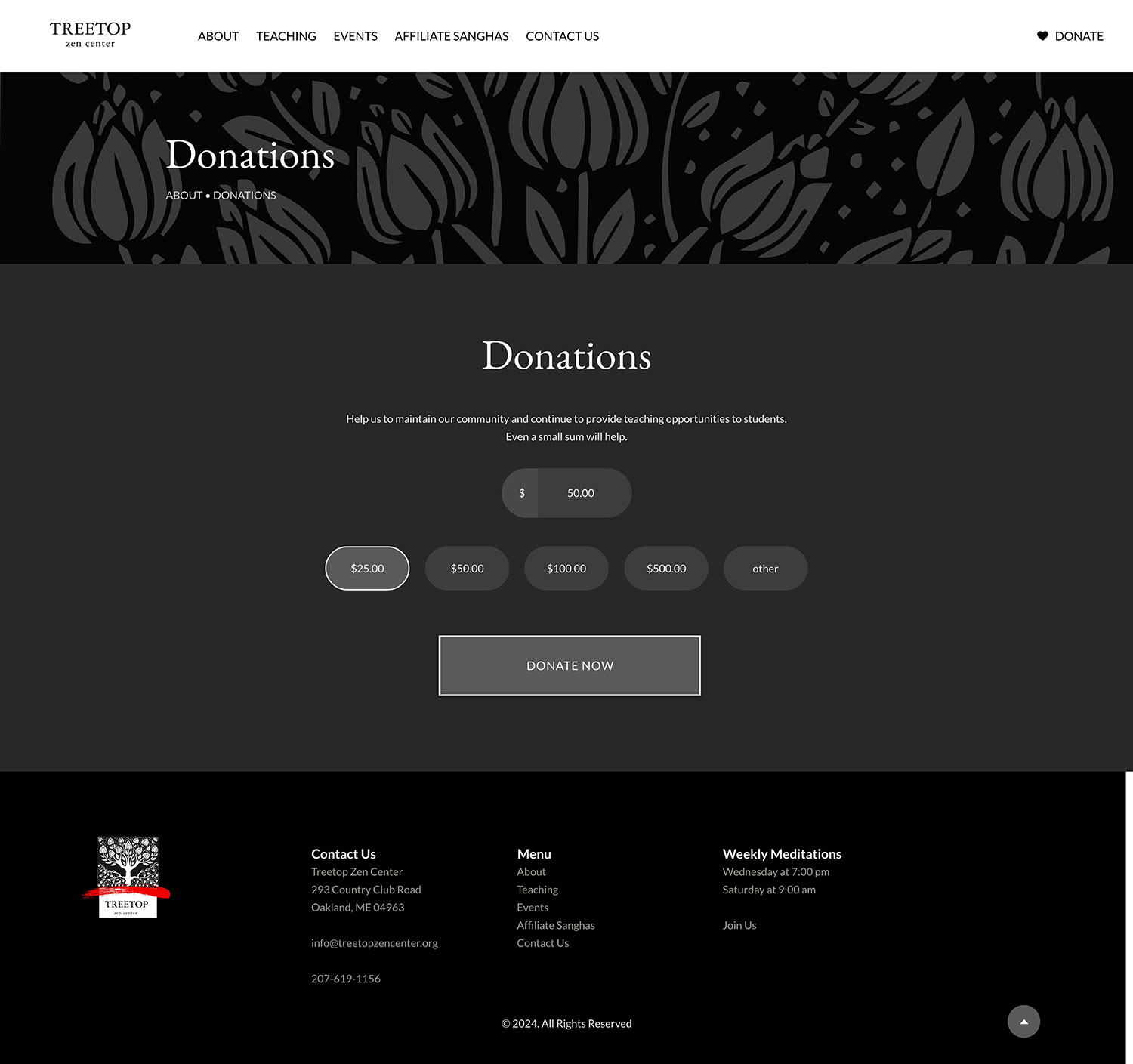
- Donations were visually overemphasized in the original layout, creating a hierarchy that conflicted with the center’s values and made leadership uncomfortable.
- The site needed to be maintainable by a non-technical editor, without becoming fragile or overly complex.
The goal became designing an experience that reduced confusion, prioritized time-based information, and aligned the content hierarchy with how people actually used the site.
Approach
I treated time and participation as the organizing principles of the experience.
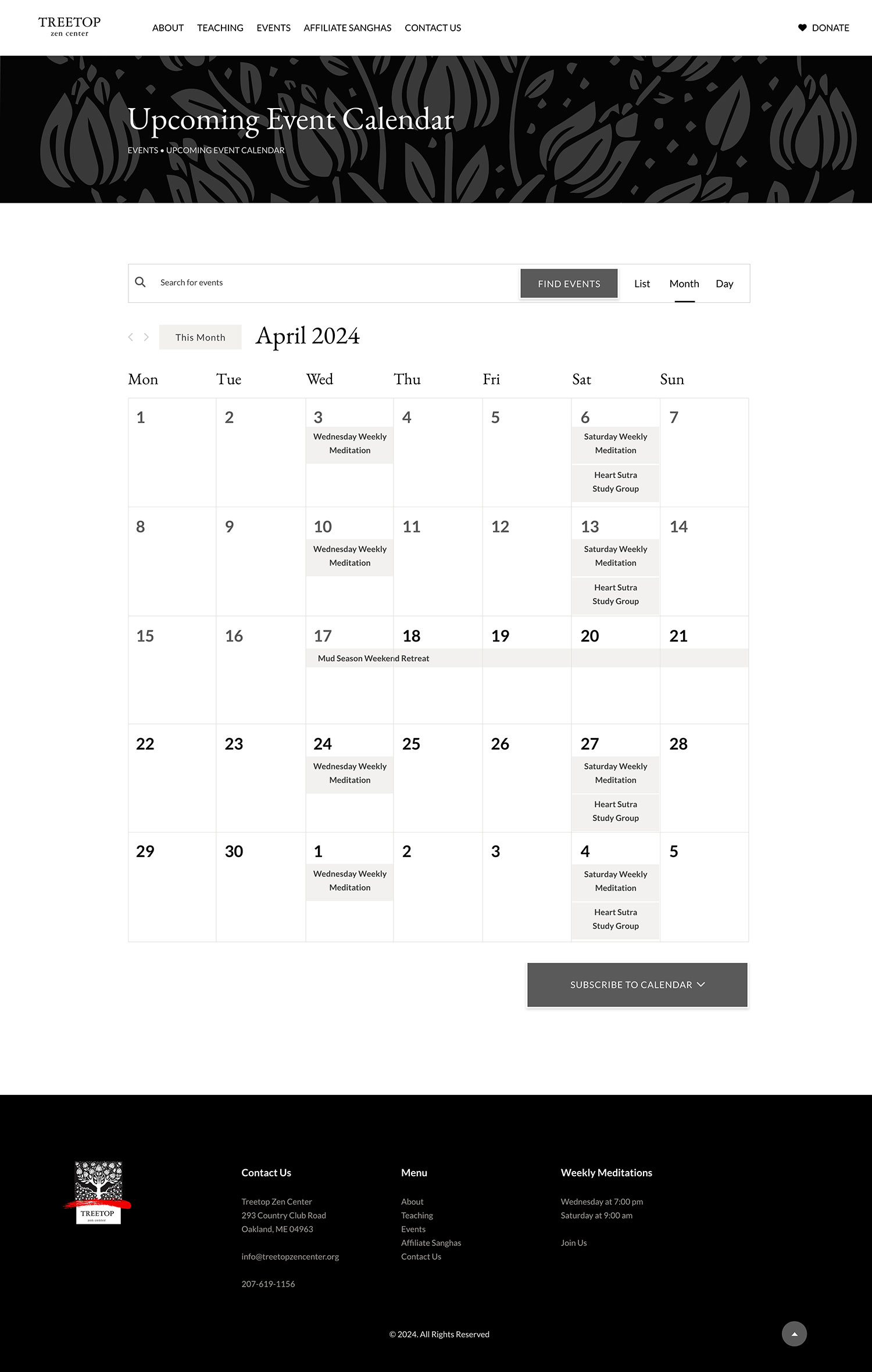
The redesign centered on making meditation schedules and events immediately visible and easy to act on. A calendar-driven structure allowed users to:
- See upcoming meditations and events at a glance
- Access detailed event information without navigating away
- Add recurring meditations or one-off events directly to their personal calendars, including updates for cancellations or weather-related changes
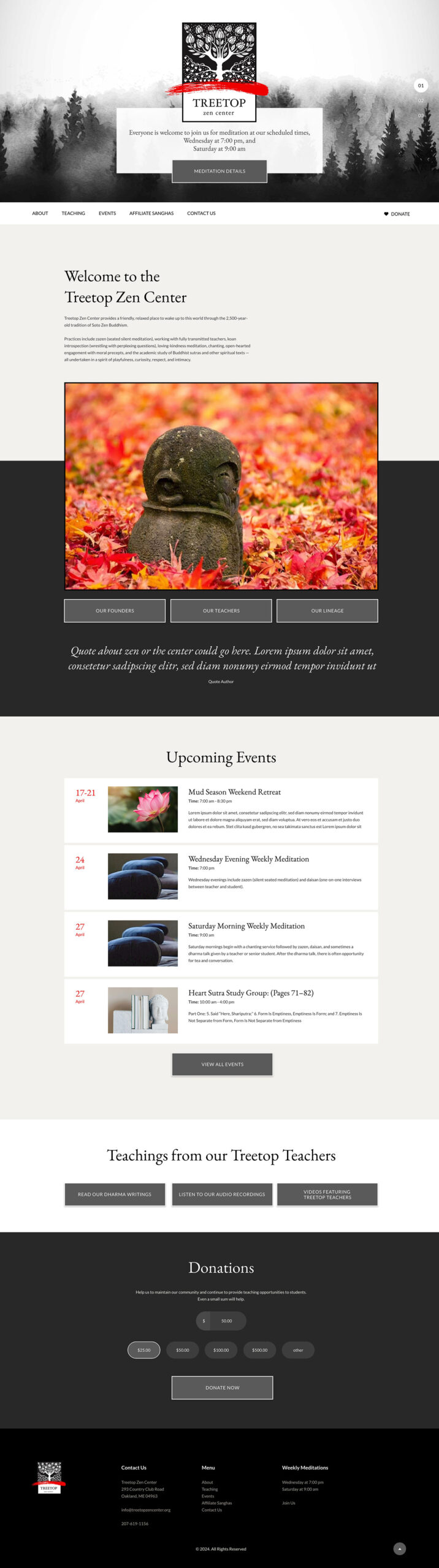
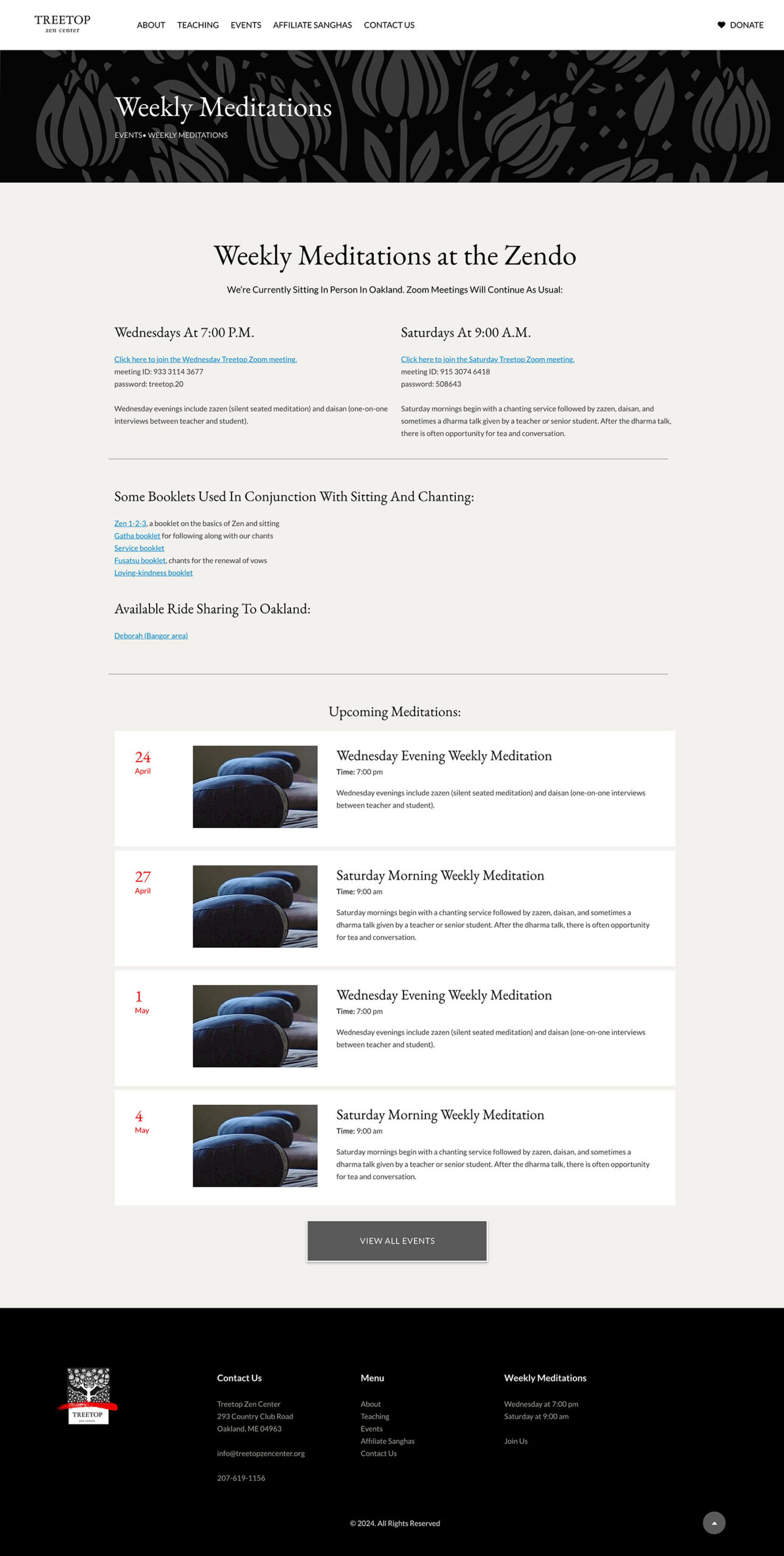
To support different user behaviors, the same information was intentionally surfaced in multiple ways—for example, weekly meditation times appeared both in the homepage hero and within individual event listings—allowing users to engage linearly or non-linearly based on their comfort level.
Donations were repositioned to be present but not dominant, ensuring financial support was accessible without overshadowing the center’s welcoming message.
To address long-term maintenance concerns, I selected a well-documented pre-built theme and created a custom PDF guide outlining how to safely edit and update the site. This was intended to reduce friction for the editor and lower the risk of accidental breakage over time.
The logo design built on a tree illustration already familiar to the community, paired with a restrained mark referencing Zen enso forms without feeling ornamental—giving the center a simple, adaptable identity they could use with confidence.
Outcome
The redesigned site clarified the center’s offerings, aligned content hierarchy with user intent, and provided a more dependable foundation for communicating schedules, events, and teachings.
The structure made it easier for visitors to understand when and how to participate, while the editorial approach acknowledged the realities of a small organization managing its own content. The project reflects a balance between usability, visual restraint, and operational sustainability—prioritizing clarity and trust over unnecessary complexity.